Hidden Water Leak Detection in Fair Lawn, NJ
Pinpoint pressurized water leaks hidden behind walls, under subflooring, and inside ceilings without destructive demolition. Reliable non-invasive diagnostics for Fair Lawn homeowners.
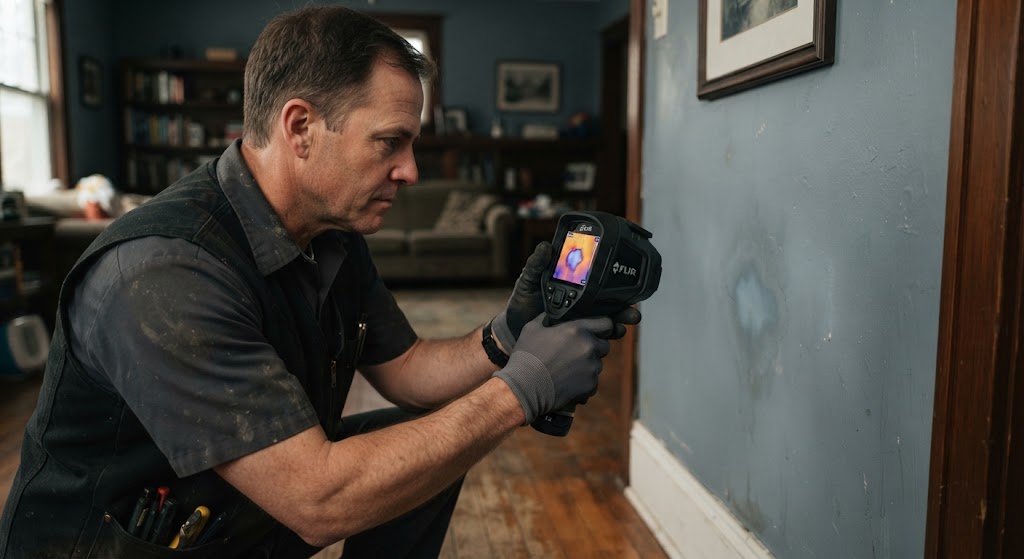
Concealed Plumbing Failures in Fair Lawn Homes
Discovering unexplained moisture or hearing water running inside finished partition walls can be stressful. For homeowners needing water leak detection Fair Lawn NJ assistance, hidden leaks represent a quiet threat to home stability. Most residential structures across Fair Lawn were built between the 1930s and 1960s, utilizing rigid copper branch lines and older galvanized steel supply networks concealed behind lath-and-plaster or early drywall.
Over several decades of constant municipal water pressure, thermal expansion, and mineral wear, microscopic pinhole fractures develop along pipe seams. Because these supply lines are enclosed within structural framing, water travels along studs, sill plates, and subfloor joists before becoming visible. Guessing where the leak originated often leads to unnecessary destruction of vintage walls.
Our specialized approach to hidden water leak detection Fair Lawn eliminates guesswork. Using calibrated electronic diagnostic tools, we isolate the exact coordinate of the pipe failure without cutting into drywall or tearing up finished flooring.
Common Warning Signs of Concealed Leaks
- Unexplained high water bill leak Fair Lawn NJ spikes on municipal statements
- Audible hissing, dripping, or rushing sounds with all faucets shut
- Discoloration, yellowish water rings, or sagging drywall ceilings
- Persistent musty odors or localized mold growth along baseboards
- Unusual warm floor spots indicating a leaking hot water supply line
- Water meter flow indicator continues rotating while fixtures are idle
Why Concealed Pipe Leaks Occur in Fair Lawn
Fair Lawn's distinctive combination of mid-20th-century construction and harsh Bergen County winters contributes directly to plumbing vulnerabilities:
Pitting Corrosion in Copper
Homes built during the 1940s and 1950s in neighborhoods like Radburn and Warren Point feature copper piping that has reached the end of its typical lifespan. Internal chemistry and water velocity gradually erode pipe walls, causing microscopic pinholes.
Winter Freeze-Thaw Stress
Cold winter weather in Northern New Jersey subjects plumbing located in exterior walls, uninsulated overhangs, and crawlspaces to severe thermal cycling. Expanding and contracting joints eventually weaken soldered solder elbows and fittings.
Structural Settlement
Seasonal freeze-thaw shifts and soil settlement throughout the borough place mechanical stress on rigid piping anchored to floor joists. A subtle pipe displacement can stress connections until an active leak behind wall Fair Lawn issue develops.
Suspecting a Hidden Water Leak Behind Your Wall?
Avoid exploratory holes in your plaster or drywall. Speak with our Fair Lawn diagnostics specialist.
Our Step-by-Step Non-Invasive Investigation Process
Rather than cutting exploratory holes across your living areas, our systematic diagnostic procedure maps the issue scientifically:
Pressure Decay Testing
We isolate hot and cold domestic water supplies at the main manifold and monitor static pressure gauges to confirm whether a pressurized system is actively leaking.
Acoustic Listening Discs
Using ground microphones and acoustic amplification headphones, we trace the distinct high-frequency sound of pressurized water escaping through copper or PEX tubing.
Infrared Thermal Imaging
Calibrated thermographic cameras visualize subtle surface temperature anomalies behind walls and ceilings, detecting damp insulation and hidden hot-water runs.
Electronic Moisture Mapping
Non-penetrating radio-frequency moisture meters map the saturation boundary inside drywall and subflooring, confirming the exact origin before repairs begin.
What Happens After the Leak Is Pinpointed
Once the precise coordinate of the water breach is verified, the repair process becomes clean and predictable. Instead of demolishing large sections of drywall or flooring, a licensed professional can perform a targeted opening directly at the source.
Repair solutions vary based on pipe condition. For isolated copper pinholes, a surgical section replacement using approved press fittings or soldered copper sleeves is standard. When older galvanized supply piping shows extensive internal corrosion, localized rerouting or partial repiping may be recommended.
Cost factors for resolving hidden leaks depend on accessibility, the pipe material involved, and whether secondary moisture remediation is required. Precision pinpointing minimizes labor and eliminates the high cosmetic expense of reconstructing undamaged walls.
Prevention Tips for Homeowners
- Monitor municipal water bills monthly for unexpected usage spikes
- Install a pressure-reducing valve (PRV) to keep household pressure below 65 PSI
- Insulate water pipes located in exterior walls, crawlspaces, and unheated basements
- Check water meter flow indicators every quarter with all household faucets closed
Note: Plumbing work in New Jersey requires a NJ licensed master plumber.
When a Hidden Leak Is an Urgent Emergency
If you observe rapidly spreading ceiling water rings, sagging plaster, or water dripping near electrical junction boxes, act immediately. Turn off your home's main water supply valve and disconnect power to affected circuits. Active water leaks left unchecked can trigger catastrophic ceiling collapse or electrical hazards.
Concealed leaks are frequently diagnosed across Radburn, Columbia Heights, and the Warren Point sections of Fair Lawn. Whether you live in a classic Radburn brick home or a mid-century split-level near River Road, prompt diagnostics safeguard your property.
Schedule Precision Leak Detection in Fair Lawn
Get accurate answers without invasive demolition. Call our local leak specialist today.
Frequently Asked Questions
Pressurized water escaping through a pipe rupture creates distinctive sound frequencies. Our specialized acoustic sensors and ground microphones capture these vibrations through drywall and plaster, allowing technicians to locate the breach without cutting walls.
Yes. While hot water leaks display elevated thermal plumes, cold water leaks create subtle evaporative cooling patterns that alter wall surface temperatures. High-resolution infrared cameras detect both thermal variations clearly.
A sudden spike in water bills usually points to an active continuous leak in a concealed copper or galvanized supply line, a leaking toilet flapper, or a broken underground line running beneath the basement floor.
Explore related diagnostic services: Water Line Leak Detection, Pipe Leak Repair, or return to leak detection in Fair Lawn. View our regional coverage on the Service Areas page.